
Seal gaps around doors, windows how to get rid of lizards, vents and pipes with weatherstripping, door sweeps, caulk or mesh so lizards can’t slip in. Remove food and water attractants by wiping counters, storing food in sealed containers and fixing drips. Declutter, keep items off the floor and block hiding spots behind appliances. Try seasonal essential-oil sprays and check humane live traps only when needed. Follow these practical steps and you’ll cut lizard visits dramatically — keep going for more specific fixes and products.
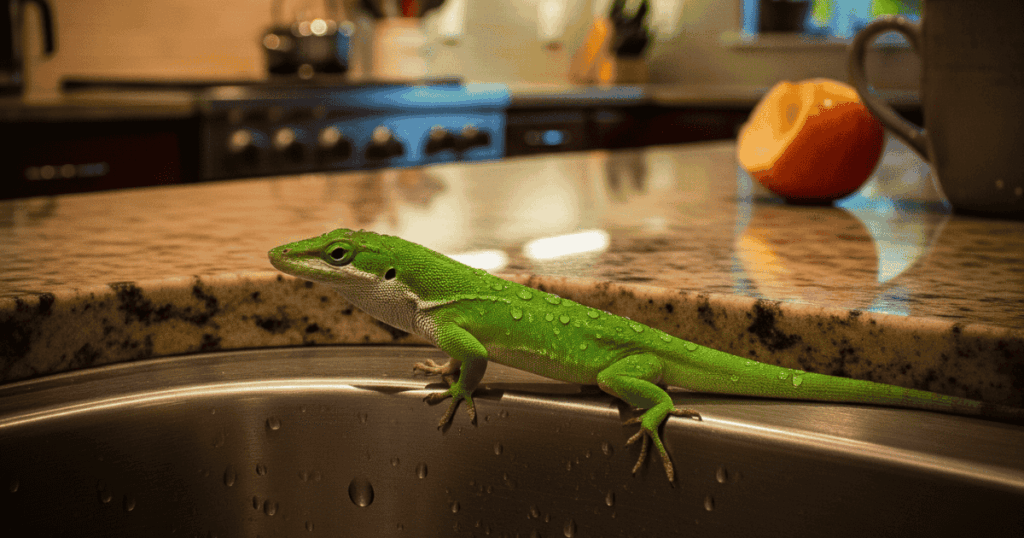
Seal Entry Points and Fix Gaps
If you want to keep lizards out of your kitchen, start by sealing their entry points: inspect around doors, windows, plumbing penetrations, vents and the foundation for gaps larger than a few millimeters, then close them with appropriate materials (weatherstripping https://igreenasia.com/, door sweeps, caulk, or expanding foam). You’ll inspect vents for torn mesh or loose fittings and repair or replace screens; consider adding fine stainless-steel mesh where airflow matters. Weatherstrip doors precisely — measure compression and replace worn seals to eliminate light gaps. Use silicone caulk for small cracks and expanding foam for irregular cavities, but avoid blocking vent function. Track work with photos and simple measurements to validate reductions in ingress points. This methodical, testable approach cuts entry opportunities without toxic measures and supports iterative improvement.
Remove Food and Water Attractants
Sealing gaps cuts off a lot of lizard traffic, but you also need to remove the things that lure them in: food crumbs, standing water and easy insect prey. You should keep clean surfaces by wiping counters after every meal, storing food in sealed containers, and running the dishwasher or washing dishes promptly. Use a microfiber cloth and a mild detergent to remove crumbs and residue that attract insects, which in turn attract lizards. Eliminate spills immediately and check under appliances for drips; consider a water sensor near sinks or refrigerators if you want a tech-forward step. Take out trash daily in sealed bins and compost only in tightly closed containers. These measures reduce prey availability and make your kitchen a less hospitable environment.
Declutter and Manage Hiding Spots
Because lizards look for cool, dark crevices, you should remove clutter and limit hiding places where they can shelter and hunt. Start by keeping clear surfaces in the kitchen: wipe counters, store appliances, and avoid piles that create shadowed gaps. Organize storage so boxes and pantry items sit off the floor in sealed containers. Hide cables and loose cords that form tunnels behind equipment. Reduce clutter around appliances and under sinks to eliminate preferred ambush sites.
- Put rarely used items in labeled, sealed bins on shelves.
- Use cable clips and trays to keep cords flat and visible.
- Elevate small appliances and sweep underneath weekly.
- Inspect and seal gaps behind fridges and ovens with foam or mesh.
These steps are practical, evidence-based, and innovation-friendly.
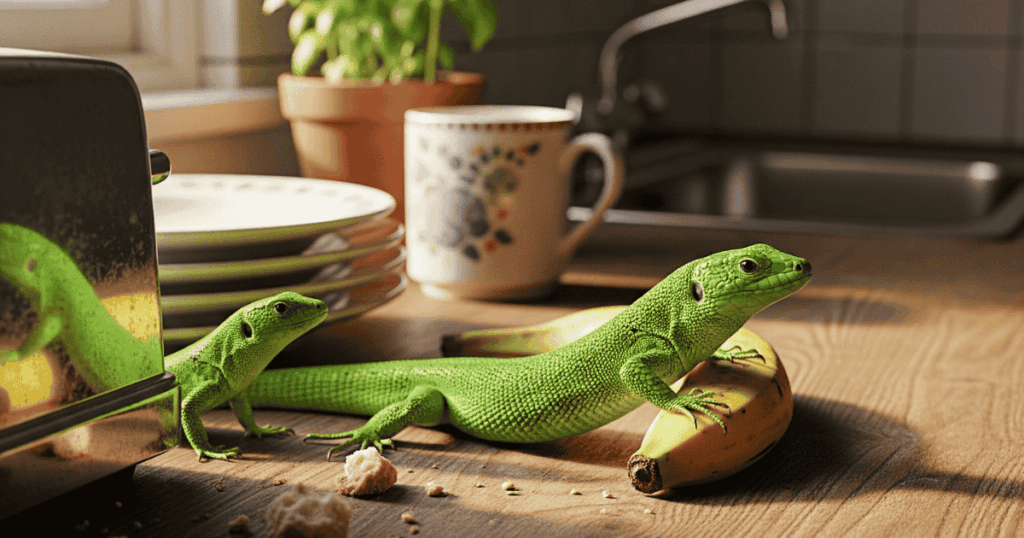
Use Safe Repellents and Deterrents
Clearing clutter reduces hiding spots, but you’ll also want measures that actively discourage lizards from returning. Use safe, evidence-backed repellents first: essential oil mixes (peppermint, clove, eucalyptus diluted in water) applied to entry points can be transiently aversive. Rotate scents to prevent habituation and test surfaces to avoid damage. Consider adjusting lighting and insect-attractant sources—reducing prey availability is more effective than confrontation.
Explore nonlethal innovations like ultrasonic devices as a supplement; the literature is mixed, so treat them as part of a layered approach rather than a sole solution. Encourage natural predators indirectly—create habitat for birds or bats outside your home—to shift local ecology away from lizards. Prioritize humane, reversible, and monitored interventions.
Implement Humane Exclusion and Trapping Methods
When you’re ready to keep lizards out without harm, start by identifying and closing off their entry routes—inspect gaps around doors, windows, vents and pipes, then use weatherstripping, door sweeps, mesh screens or silicone caulk sized to the species’ typical access points. Use targeted, evidence-based exclusion first; physical barriers outperform sprays. For occasional indoors residents, opt for humane relocation protocols and temporary enclosures that reduce stress and prevent reentry. If trapping is necessary, choose live, species-appropriate traps, check them frequently, and release nearby into suitable habitat.
- Seal entry points based on measured gap size and lizard behavior
- Use modular mesh or magnetic sweeps for rapid, innovative fixes
- Employ small humane traps checked every few hours
- Transport in ventilated temporary enclosures for safe release